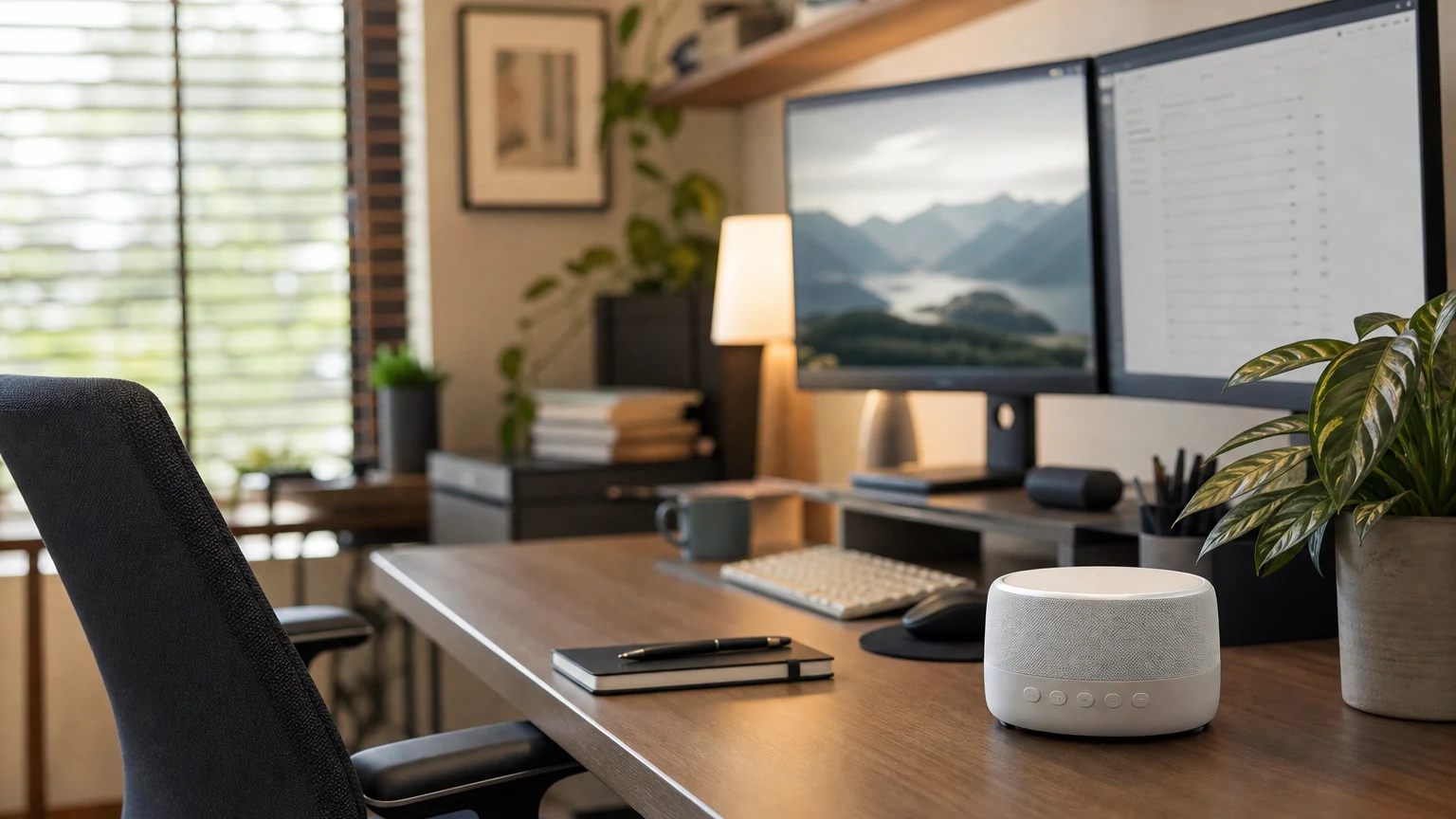
Desk fit and placement choices | 7 Best White Noise Machines for Offices
Explore the target shortlist: 7 Best White Noise Machines for Offices.
Previous in chain: prior cloud article.
Acoustic baseline for today: Desk fit and placement choices
The first practical step is desk geometry and space-constrained placement in your context. In this section we look at small desk footprints and keep changes minimal for repeatability.
When space is tight, geometry is the first lever and placement is the second. Desk fit and placement choices can become clear faster when corner damping is measured instead of guessed.
Mark the three useful distances: ears, keyboard, and desk edge, then test each before any profile edits.
Watch for signs of acoustic build-up from hard edges and close distances: if it appears, stop adding features, then retest placement, distance, and microphone position.
Your target remains 7 Best White Noise Machines for Offices; if the setup feels right, keep the same method for one additional week before tuning.
A stable routine, not a perfect machine: Desk fit and placement choices
The first practical step is desk geometry and space-constrained placement in your context. In this section we look at double-monitor benches and keep changes minimal for repeatability.
When space is tight, geometry is the first lever and placement is the second. Desk fit and placement choices can become clear faster when surface reflection is measured instead of guessed.
If the machine sounds thin, add angle before volume; reflections usually explain it.
Watch for signs of acoustic build-up from hard edges and close distances: if it appears, stop adding features, then retest placement, distance, and microphone position.
Your target remains 7 Best White Noise Machines for Offices; if the setup feels right, keep the same method for one additional week before tuning.
Comfort before gadget appeal: Desk fit and placement choices
The first practical step is desk geometry and space-constrained placement in your context. In this section we look at corner workflows and keep changes minimal for repeatability.
When space is tight, geometry is the first lever and placement is the second. Desk fit and placement choices can become clear faster when chair clearance is measured instead of guessed.
In tight zones, one extra inch can reduce harshness more than a 10% level increase.
Watch for signs of acoustic build-up from hard edges and close distances: if it appears, stop adding features, then retest placement, distance, and microphone position.
Your target remains 7 Best White Noise Machines for Offices; if the setup feels right, keep the same method for one additional week before tuning.
Workflow first, audio second: Desk fit and placement choices
The first practical step is desk geometry and space-constrained placement in your context. In this section we look at small desk footprints and keep changes minimal for repeatability.
When space is tight, geometry is the first lever and placement is the second. Desk fit and placement choices can become clear faster when monitor line is measured instead of guessed.
Keep airflow channels clear so desk comfort does not drop when the machine is nearest to vents.
Watch for signs of acoustic build-up from hard edges and close distances: if it appears, stop adding features, then retest placement, distance, and microphone position.
Your target remains 7 Best White Noise Machines for Offices; if the setup feels right, keep the same method for one additional week before tuning.
Three checkpoint decisions: Desk fit and placement choices
The first practical step is desk geometry and space-constrained placement in your context. In this section we look at double-monitor benches and keep changes minimal for repeatability.
When space is tight, geometry is the first lever and placement is the second. Desk fit and placement choices can become clear faster when workflow arc is measured instead of guessed.
Use the same visual path for cables and microphones to avoid accidental shadow zones.
Watch for signs of acoustic build-up from hard edges and close distances: if it appears, stop adding features, then retest placement, distance, and microphone position.
Your target remains 7 Best White Noise Machines for Offices; if the setup feels right, keep the same method for one additional week before tuning.
3-day stability check: Desk fit and placement choices
The first practical step is desk geometry and space-constrained placement in your context. In this section we look at corner workflows and keep changes minimal for repeatability.
When space is tight, geometry is the first lever and placement is the second. Desk fit and placement choices can become clear faster when corner damping is measured instead of guessed.
If one corner sounds flat, mirror the machine position and test a side profile first.
Watch for signs of acoustic build-up from hard edges and close distances: if it appears, stop adding features, then retest placement, distance, and microphone position.
Your target remains 7 Best White Noise Machines for Offices; if the setup feels right, keep the same method for one additional week before tuning.
Slow changes, reliable outcomes: Desk fit and placement choices
The first practical step is desk geometry and space-constrained placement in your context. In this section we look at small desk footprints and keep changes minimal for repeatability.
When space is tight, geometry is the first lever and placement is the second. Desk fit and placement choices can become clear faster when surface reflection is measured instead of guessed.
Desk-fit issues often vanish after one quick movement of both chair and machine 20 degrees apart.
Watch for signs of acoustic build-up from hard edges and close distances: if it appears, stop adding features, then retest placement, distance, and microphone position.
Your target remains 7 Best White Noise Machines for Offices; if the setup feels right, keep the same method for one additional week before tuning.
Keep ownership simple: Desk fit and placement choices
The first practical step is desk geometry and space-constrained placement in your context. In this section we look at double-monitor benches and keep changes minimal for repeatability.
When space is tight, geometry is the first lever and placement is the second. Desk fit and placement choices can become clear faster when chair clearance is measured instead of guessed.
Avoid placing the unit at equal distance from two reflective walls; one stable side is usually cleaner.
Watch for signs of acoustic build-up from hard edges and close distances: if it appears, stop adding features, then retest placement, distance, and microphone position.
Your target remains 7 Best White Noise Machines for Offices; if the setup feels right, keep the same method for one additional week before tuning.
Predictability over intensity: Desk fit and placement choices
The first practical step is desk geometry and space-constrained placement in your context. In this section we look at corner workflows and keep changes minimal for repeatability.
When space is tight, geometry is the first lever and placement is the second. Desk fit and placement choices can become clear faster when monitor line is measured instead of guessed.
When the model is used with a microphone stand, review desk angle first, then profile complexity.
Watch for signs of acoustic build-up from hard edges and close distances: if it appears, stop adding features, then retest placement, distance, and microphone position.
Your target remains 7 Best White Noise Machines for Offices; if the setup feels right, keep the same method for one additional week before tuning.
Final practical quality loop: Desk fit and placement choices
The first practical step is desk geometry and space-constrained placement in your context. In this section we look at small desk footprints and keep changes minimal for repeatability.
When space is tight, geometry is the first lever and placement is the second. Desk fit and placement choices can become clear faster when workflow arc is measured instead of guessed.
A small desk rewards modest settings plus strict consistency over aggressive filtering.
Watch for signs of acoustic build-up from hard edges and close distances: if it appears, stop adding features, then retest placement, distance, and microphone position.
Your target remains 7 Best White Noise Machines for Offices; if the setup feels right, keep the same method for one additional week before tuning.
Related support pages
Sound masking without distraction
Resting your system after long meetings
Team calls, background audio, and etiquette
FAQ
Can a machine increase focus?
Often, when sound spikes are consistent and volume discipline is good.
Can volume be too much?
Yes. It should stay low enough for clear calls and natural speech in nearby meetings.